
Saturday, February 23, 2013
Pickling bird's eye chilies
First ever attempt... using a more "Asian" recipe: rice vinegar, sugar and salt. Will have to wait and try before giving the verdict. ;)

Saturday, February 16, 2013
Useful tip: Keeping instant coffee fresh
Instant coffee granules usually lose their flavor over time after the bottle is opened. This is a dilemma when you wanna save some money by buying a bigger bottle but yet have to take a longer time to consume all of it.
Learned a neat little trick from Jap drama Detective Galileo. Instead of removing the foil entirely, just punch a hole at the side. Instead of scooping the granules with a spoon, just pour out directly from the bottle.


Two significant advantages: Firstly, opening a small hole exposes much lesser of the coffee to the air and therefore losing less of the flavor. Secondly, when we use a spoon (especially a metallic one) to scoop, there tend to be moisture introduced to the coffee simply because of the slight difference in temperature (metal is cooler). That's why over a longer period of time, the coffee may "clump" together or even get moldy.
I think it's a great idea. Can anyone think of other applications for this idea?
Learned a neat little trick from Jap drama Detective Galileo. Instead of removing the foil entirely, just punch a hole at the side. Instead of scooping the granules with a spoon, just pour out directly from the bottle.


Two significant advantages: Firstly, opening a small hole exposes much lesser of the coffee to the air and therefore losing less of the flavor. Secondly, when we use a spoon (especially a metallic one) to scoop, there tend to be moisture introduced to the coffee simply because of the slight difference in temperature (metal is cooler). That's why over a longer period of time, the coffee may "clump" together or even get moldy.
I think it's a great idea. Can anyone think of other applications for this idea?
Tuesday, February 12, 2013
Sour Power

A friend of mine used to comment that the tastes of China can be described as "南咸北甜、东酸西辣" or "Salty South, Sweet North, Sour East, Spicy West". This is a generic statement drawn from the dishes such as "sour and spicy soup" (Shanghai - East), "ma la hotpot" (Chongqing - West) and so on. There is some truth in it I supposed. Hence, with most of our ancestors coming from the south, we have a lot more dishes that are salty/savoury. Yet, I believe "sour" has played an important role albeit a rather stealth one in our cuisine.
Sour, which is acidic, has the capability of removing oil. Hence, a lot of dishwashing detergents have lemon or lime. This also aids digestion and hence creates a bigger appetite. Sour also has the ability to excites and wakes up the taste buds and stomach. Naturally, we see sour being deployed in appetizers to stimulate the appetites and get the whole body ready for a good meal coming. Western salads, which are either eaten in the beginning or as a compliment to the main course, also utilizes sour. No matter whether you go for 50% oil - 50% sour or 1-part oil to 2-parts sour formula, the sour taste (lemon, vinaigrette etc) brings out the freshness of the salad. As a compliment to the main course, it will also continuously excite the palate so that the main course is "welcomed" by the stomach all the way to the end.
French cuisine usually deploys sour in the form of a sorbet in between the hors d'oeuvre and entree. This is to cleanse the palate usually from the seafood so that the tongue is ready for the meat entree. Sour is also used widely with seafood to remove the "fishy" taste.
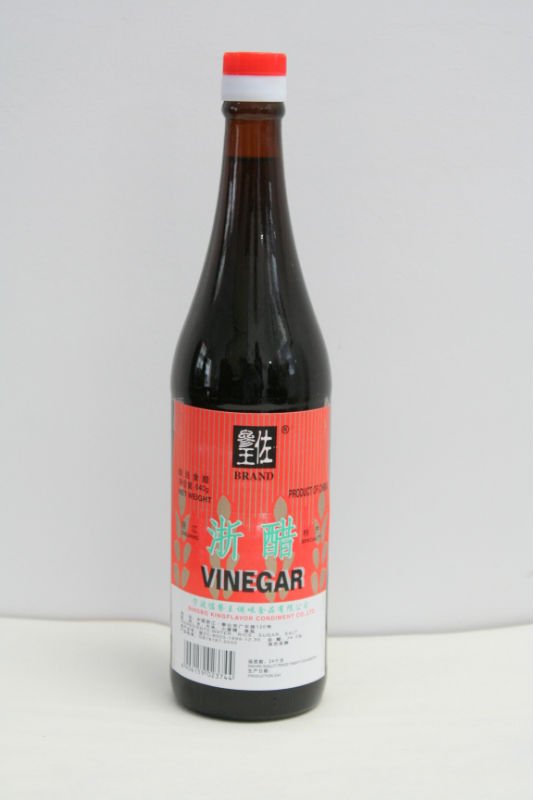 Coming back to Singapore, this explains one of the reasons why I liked the bak chor noodles at Bras Basah Complex. They were generous with the Zhejiang vinegar (they also had a bottle with the other condiments like the chili, garlic and soy sauce for you to add more). The vinegar played an important part in making an otherwise rather heavy (jer-lat) bowl of noodles (due to the lard and pork) into something that you'll enjoy down to the last strand.
It also explains why I liked the Vietnamese Banh Beo compared to our own chwee kueh which can get too salty. This is why the little lime that is given with your fried Hokkien prawn mee, fried beef hor-fun, bbq chicken wings, mee rebus, mee siam etc plays such a vital role (I get rather irritated when the hawkers get stingy and give a miserably half lime).
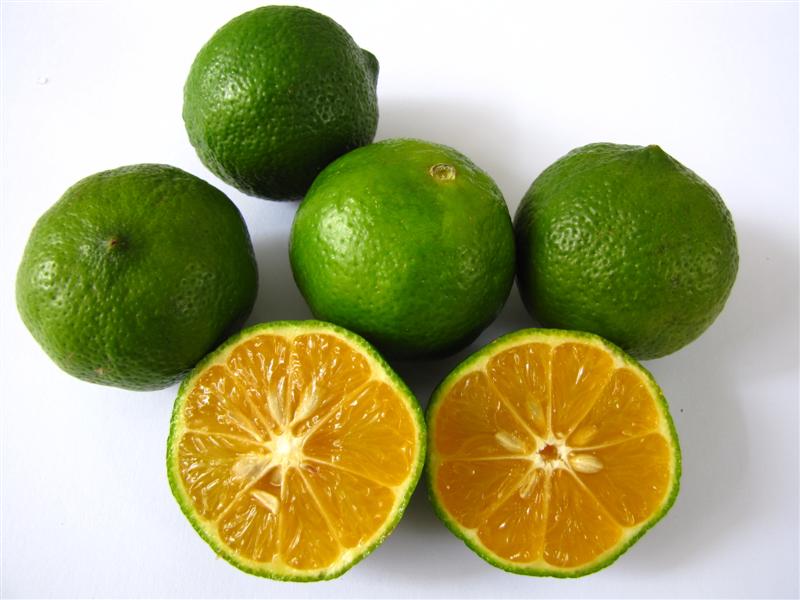
I believe the lime can be extended to other hawker fare. Eg., chai tau kueh. I love the black chai tau kueh at Bedok interchange hawker centre (松柏) but when I eat a big plate myself, the meal doesn't end on a high note because it gets too heavy. Maybe I should try it with lime next time... :) I'm very appreciative when Tong Kee Chicken Rice (Blk 3A #01-25, Commonwealth Drive, Tanglin Halt Hawker Centre) gives lime with their roast chicken rice. More should do the same instead of just having it in their chili sauce. Then we can "adjust" to our preferences (say more sour less spicy).
Anyway, the next time you tuck into your favourite hawker fare, look out for the little bit of sour. You may have missed it in the past, but if it is missing, you'll know that your food is not quite as enjoyable.
Subscribe to:
Posts (Atom)